A Land Flowing with Milk and Honey: What It Actually Means
August 23, 20265 min readHistory
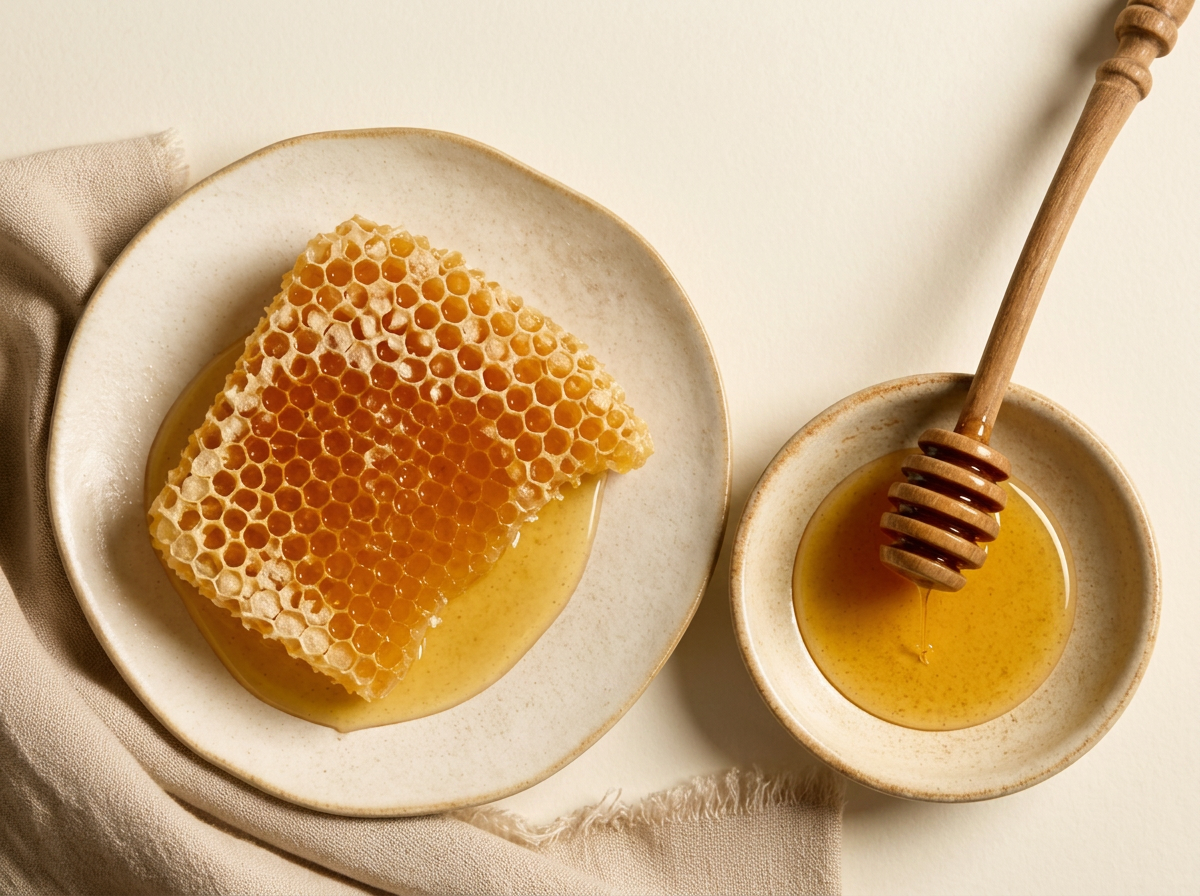
‘A land flowing with milk and honey’ is probably the single most quoted phrase about the Promised Land, repeated by different narrators across seven separate books of the Bible. It is also, on close reading, a phrase about a very specific kind of wealth — one built on livestock and foraging rather than farming, which was exactly the point it needed to make to a people about to leave Egypt for a land they had never worked a day in their lives.
Where the phrase actually appears
The exact wording ‘flowing with milk and honey’ appears eight times in the King James Version, and God speaks it first, describing the land he is about to give Israel, to Moses at the burning bush: ‘a land flowing with milk and honey; unto the place of the Canaanites, and the Hittites, and the Amorites, and the Perizzites, and the Hivites, and the Jebusites’ (Exodus 3:8). The same wording returns in Exodus 3:17, 13:5, and 33:3, then again decades later in Jeremiah 11:5 and 32:22, and Ezekiel 20:6 and 20:15. An older-sounding variant, ‘floweth with milk and honey,’ carries the identical idea through twelve further verses, from Leviticus 20:24 through Joshua 5:6 — twenty appearances in total describing Canaan this way, none of them the ‘land of wheat, and barley’ list of Deuteronomy 8:8, which is a related but separate description of the same land.
The phrase became fixed enough in Israel’s vocabulary that it could be turned back on the speaker. During Korah’s rebellion in the wilderness, Dathan and Abiram complained to Moses using the exact idiom — but pointed it at Egypt instead of Canaan: ‘Is it a small thing that thou hast brought us up out of a land that floweth with milk and honey, to kill us in the wilderness’ (Numbers 16:13). By that point the phrase had become shorthand for any land of easy abundance, regardless of which land Scripture actually meant it for.
What ‘milk’ meant
Milk, in this pairing, meant the daily output of sheep and goats rather than a dairy industry — herds that could graze on hillsides not yet cleared or plowed, producing food without a single field being planted first. It was drunk fresh, thickened into curds, or churned into butter for storage, and across the many verses that mention milk in some form, it consistently stands for a kind of wealth that required only animals and pasture, not settled agriculture or a harvest season to wait out. The image carried into the New Testament too, in a different key: Peter compares basic Christian teaching to ‘the sincere milk of the word’ that a newborn craves (1 Peter 2:2), the same idea of milk as the most basic nourishment there is, applied to something other than food.
What ‘honey’ meant, and the honest uncertainty around it
Honey is the less settled half of the phrase. It could mean wild honey gathered from bees nesting in rock crevices and tree hollows — the same kind Samson found inside a lion’s carcass on the way to his own wedding (Judges 14:8) — or it could mean the thick syrup pressed from dates, which many scholars think is the more likely sense in agricultural contexts like Deuteronomy 8:8’s list of crops. Both were realistic, common sweeteners in the ancient Near East, and Scripture itself never specifies which one the phrase intends every time it appears. The honest answer is that ‘honey’ likely covers both across its many uses in Scripture, without one fixed meaning attached to the word.
Why the pairing signals abundance without effort
Read together, milk and honey describe a land generous enough to feed people from what wanders and grows on its own — grazing herds and foraged sweetness — rather than a land that demands years of irrigation and cultivation before it produces anything at all. For people who had just spent a generation in the wilderness eating manna, unable to plant so much as a garden, that particular kind of abundance was the promise worth naming first, well before any list of settled crops like Deuteronomy 8:8’s came later.
One image, seven books
Twenty verses, seven books, one rebellion that borrowed the phrase for the wrong country, and one enduring image of a land that gives generously before a single seed is planted. The free Starter Guide gathers this and the rest of the Bible’s food language into one printable reference.
The Biblical Diet Starter Guide — free
The printable clean & unclean list, a week of shopping lists, and seven biblical recipes.
Weekly recipes & shopping lists follow. Unsubscribe anytime.