Clean and Unclean Foods in the Bible: The Complete List
August 20, 20265 min readClean & unclean
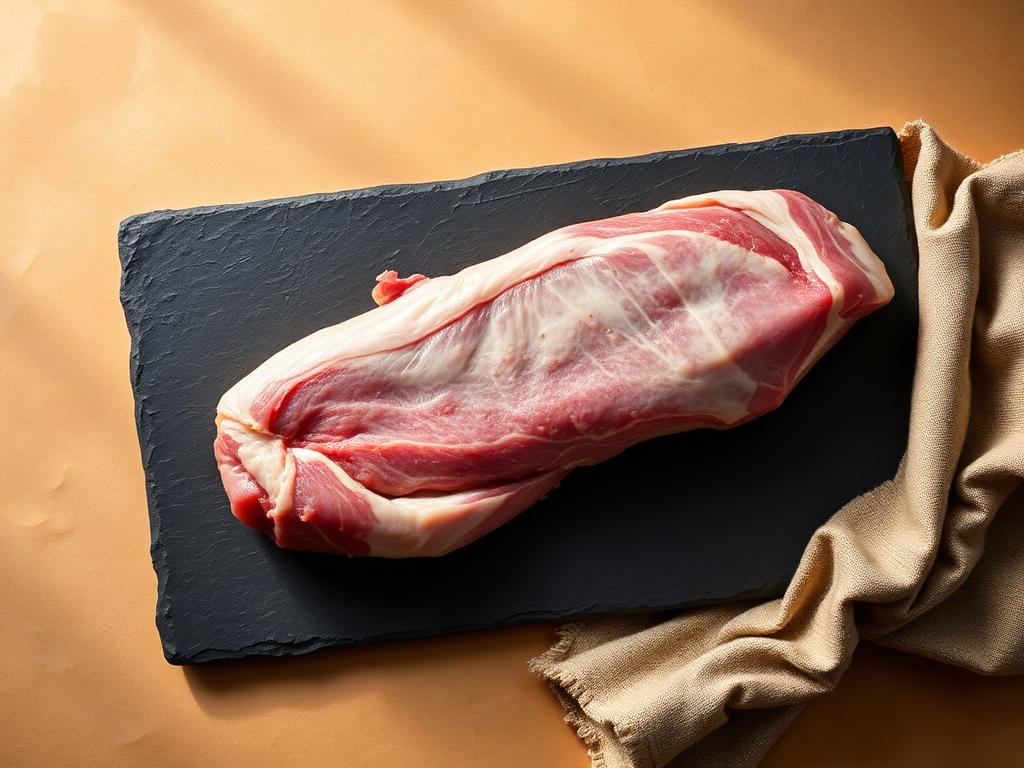
Leviticus 11 does not give Israel a simple list of forbidden animals to memorize — it gives six categories, each with its own rule or named list, one for each broad category of creature, and lets the test sort the animals rather than naming every single one. Deuteronomy 14 restates the same framework with some added names — and, in the case of flying insects, without repeating Leviticus’s exception for leaping kinds (Deut 14:19). Together they form the complete framework behind every ‘is this food clean’ question this site answers one food at a time.
Land animals: parts the hoof and chews the cud
The test for land animals has two parts, and an animal must pass both. ‘Whatsoever parteth the hoof, and is clovenfooted, and cheweth the cud, among the beasts, that shall ye eat’ (Leviticus 11:3) — a rule that covers ox, sheep, goat, deer, and roebuck. Failing either half disqualifies an animal regardless of the other: the camel chews the cud but does not divide the hoof (Leviticus 11:4), and the swine divides the hoof but does not chew the cud, ‘he is unclean to you’ (Leviticus 11:7) — the most famous failure of the two-part test, and the reason pork became the best-known example of forbidden meat. It is worth stating directly: no Israelite is ever narrated actually eating pork anywhere in Scripture. The only two descriptions of anyone eating swine’s flesh, in Isaiah 65:4 and 66:17, are both accusations against apostates practicing forbidden rites — not a meal shown in the ordinary run of any story.
The hare and the coney present a smaller puzzle. Leviticus 11:6 says of the hare that ‘he cheweth the cud… he is unclean,’ despite neither animal being a true ruminant in the biological sense. The likeliest explanation, offered cautiously by a number of commentators, is that the hare’s constant side-to-side jaw motion while it eats looks enough like cud-chewing to an observer that the text describes it in those familiar terms — a description of appearance rather than a technical claim about digestion. Either way, the hare also fails the hoof half of the test, so its unclean status does not actually depend on the answer.
Fifteen questions
The Leviticus 11 Kitchen Test
Answer yes or no on fifteen everyday foods and see how your own shelves read against the chapter, verse by verse.
Take the testWater creatures: fins and scales
Anything living in the seas or rivers needed both fins and scales: ‘whatsoever hath fins and scales in the waters… them shall ye eat’ (Leviticus 11:9), while ‘all that have not fins and scales… shall be an abomination unto you’ (Leviticus 11:10). That test passes ordinary scaled fish — tilapia, salmon, cod — and fails shellfish, crustaceans, and smooth-skinned fish like catfish and eel, none of which the text names individually. See the fuller breakdown in ‘Is Shrimp Unclean in the Bible?’
Birds: a named list, not a test
Birds work differently from the first two categories — instead of a rule to apply, Leviticus 11:13-19 gives a specific list of forbidden birds, weighted heavily toward birds of prey and scavengers: the eagle, the vulture, the raven, the owl, the hawk, the stork, the heron, and the bat, grouped here with birds though modern classification treats it as a mammal. Everything outside that list was permitted, which is why dove, pigeon, quail, partridge, and hen appear throughout Scripture without any hint of prohibition.
Flying insects: made for leaping
Winged, crawling insects were generally forbidden, with one exception carved out for creatures built to leap rather than merely walk: ‘the locust after his kind, and the bald locust after his kind, and the beetle after his kind, and the grasshopper after his kind’ (Leviticus 11:22). That narrow exception is what makes John the Baptist’s wilderness diet of locusts and wild honey (Matthew 3:4) a lawful meal rather than a desperate one.
Creeping things and carrion: no exceptions
The last two categories carry no clean examples at all. Everything that creeps upon the earth — the weasel, the mouse, the tortoise, the lizard, the snail, and the mole among them — is unclean outright, with no test to pass or fail (Leviticus 11:29-30). Manner of death mattered just as much as species: ‘Ye shall not eat of anything that dieth of itself’ (Deuteronomy 14:21), and flesh torn by wild animals was to be thrown to the dogs rather than eaten (Exodus 22:31) — a clean sheep found already dead in a field was still off the table.
Where every category leads
Six tests, applied consistently, sort every animal Scripture names into clean or unclean — and each one is explored food by food elsewhere on this site. For a printable version of the complete list to keep in the kitchen, the free Starter Guide has it laid out on a single page.
Frequently asked questions
How many categories of clean and unclean animals does Leviticus 11 define?
Six: land animals, water creatures, birds, flying insects, creeping things, and carrion — each with its own rule or named list, detailed above.
Why is the pig unclean if it has a split hoof like clean animals?
Because Leviticus 11:7 requires both a split hoof and cud-chewing, and the pig only meets the first requirement. It fails the second half of the two-part test.
Did Israelites in the Bible ever actually eat pork?
Not according to any narrative in Scripture. The only two descriptions of anyone eating swine’s flesh — Isaiah 65:4 and 66:17 — are both accusations of forbidden, idolatrous practice, not an ordinary meal.
Why does Leviticus 11:6 say the hare chews the cud if it biologically does not?
Many commentators read this as a description of how the hare looks while eating — its jaw moves side to side in a way that resembles cud-chewing — rather than a technical claim about its digestion. The hare is unclean regardless, since it also fails the hoof half of the test.
The Biblical Diet Starter Guide — free
The printable clean & unclean list, a week of shopping lists, and seven biblical recipes.
Weekly recipes & shopping lists follow. Unsubscribe anytime.