Is Shrimp Unclean in the Bible? What Leviticus 11 Actually Says
August 16, 20265 min readClean & unclean
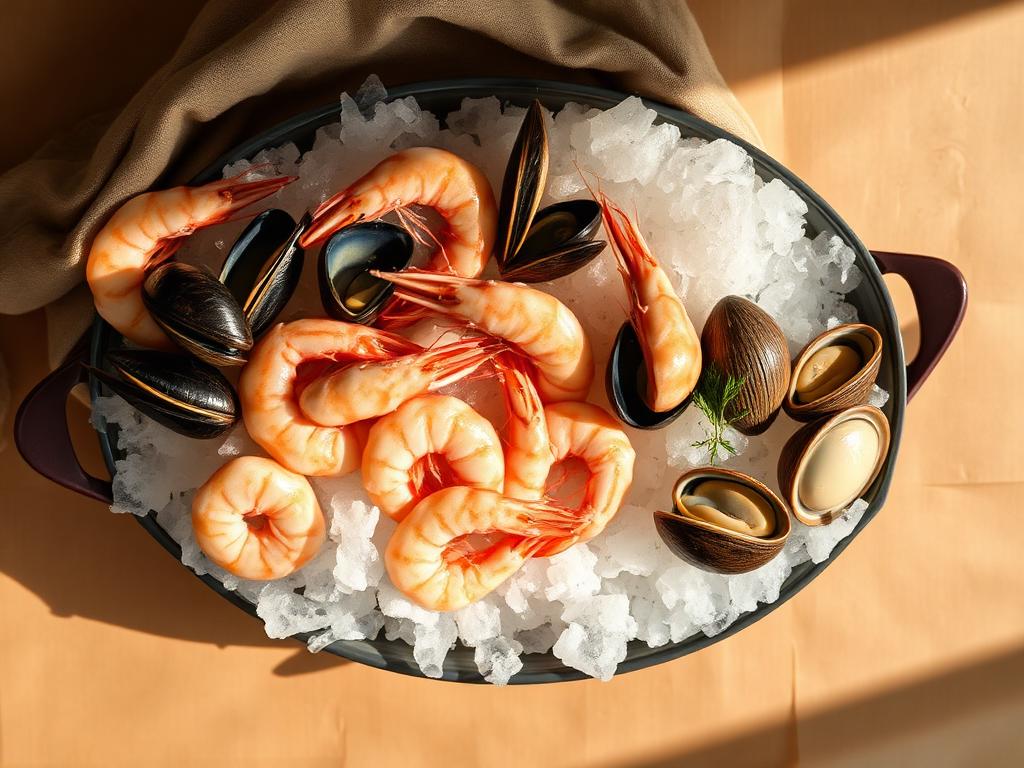
Ask whether shrimp is unclean in the Bible and the search usually starts in the wrong place — in a concordance, hunting for the word ‘shrimp.’ It is not there. Leviticus 11 never mentions shrimp, crab, lobster, or any other named shellfish. What it gives instead is a rule, stated three times for emphasis, that quietly rules out the entire category without ever naming a single species by name.
The fins-and-scales rule
The rule appears in the middle of a longer set of instructions about which creatures Israel could eat from the water. ‘These shall ye eat of all that are in the waters: whatsoever hath fins and scales in the waters, in the seas, and in the rivers, them shall ye eat’ (Leviticus 11:9). The next verse states the opposite just as plainly: ‘And all that have not fins and scales in the seas, and in the rivers, of all that move in the waters, and of any living thing which is in the waters, they shall be an abomination unto you’ (Leviticus 11:10). Verse 12 restates the negative once more: ‘Whatsoever hath no fins nor scales in the waters, that shall be an abomination unto you’ (Leviticus 11:12). One test, repeated three times, with no exceptions listed.
Why shrimp, crab, and lobster fail it
Shrimp, crab, lobster, and every other crustacean lack both features the rule asks for. None of them have fins in any meaningful sense, and none of them have true scales — a shrimp’s shell is one continuous exoskeleton, not the overlapping plates that cover a scaled fish. Oysters, clams, and mussels fail even more plainly, with neither fins nor a scaled body of any kind. By the plain terms of Leviticus 11:9-12, all of them land on the same side of the rule, alongside catfish, eel, and any other finless or scaleless creature living in the water.
A category the text never names directly
Here is the detail most people miss: the King James Version never uses a specific word for shrimp, crab, lobster, oyster, or shellfish as a group. None of those words appear anywhere in it. Leviticus 11 does not single out shellfish for individual condemnation the way it names the eagle, the raven, or the swine — it disqualifies the whole category with one general test and leaves the rest to inference. Shellfish were common enough along the wider Mediterranean coast, but the fins-and-scales rule meant Israel’s own diet stayed oriented toward river and lake fish instead.
Two readings in the New Testament
Whether that rule still applies is where sincere readers part ways, and the fairest way to describe it is to lay out both readings rather than pick one. The first draws on two passages read together. In Mark 7, Jesus responds to Pharisees who criticized his disciples for eating with unwashed hands — a rabbinic tradition, not the Leviticus 11 food list itself (Mark 7:1-5). His answer reaches further than hand-washing: ‘There is nothing from without a man, that entering into him can defile him’ (Mark 7:15), because it ‘entereth not into his heart, but into the belly, and goeth out into the draught, purging all meats’ (Mark 7:18-19). Many Christians read that closing phrase as Jesus setting aside the food categories altogether.
The second passage often paired with it is Peter’s rooftop vision in Acts 10, where a sheet full of animals descends and a voice tells him, ‘Rise, Peter; kill, and eat’ (Acts 10:13), then answers his refusal with, ‘What God hath cleansed, that call not thou common’ (Acts 10:15). Read alone, that sounds like a direct statement about food. But Peter explains the vision differently just a few verses later, telling a Gentile household that ‘God hath shewed me that I should not call any man common or unclean’ (Acts 10:28) — about people, not a menu. Both readings sit inside the same chapter, which is exactly why the question of whether the fins-and-scales rule still binds a Christian’s plate remains genuinely open between traditions rather than settled by either verse alone.
Where to go from here
Whichever reading feels right, the rule Leviticus set down is simple enough to hold in your head: fins and scales, or it is out. For the full picture of every clean and unclean category — how birds, insects, and land animals are each sorted in turn — the free Starter Guide lays out the complete list on one printable page.
Frequently asked questions
Does the Bible name shrimp as unclean?
Not directly. Leviticus 11:9-12 disqualifies every water creature without fins and scales, and shrimp, crab, and lobster all fail that test — but the text never uses the word shrimp or names any shellfish individually.
What is the biblical test for clean seafood?
Fins and scales, both present, on anything living in the seas or rivers (Leviticus 11:9). Fish with both — tilapia, salmon, cod — pass; anything missing either one, including catfish and eel, does not.
Did the New Testament cancel the Old Testament food laws?
Readers disagree. Some point to Jesus ‘purging all meats’ in Mark 7:19 and Peter’s vision in Acts 10:15 as evidence the distinction ended. Others note that Mark 7 addresses a hand-washing tradition and that Peter himself later explained his vision as being about people, not food (Acts 10:28). Both readings are represented in the Christian tradition.
Is eating shrimp considered sinful for Christians today?
That depends on which reading of the passages above a person or tradition follows. It is a matter of honest, ongoing disagreement rather than a single settled answer, and this site aims to describe the text rather than issue rulings on it.
The Biblical Diet Starter Guide — free
The printable clean & unclean list, a week of shopping lists, and seven biblical recipes.
Weekly recipes & shopping lists follow. Unsubscribe anytime.