What Did Jesus Eat? Every Food the Gospels Mention
August 19, 20265 min readHistory
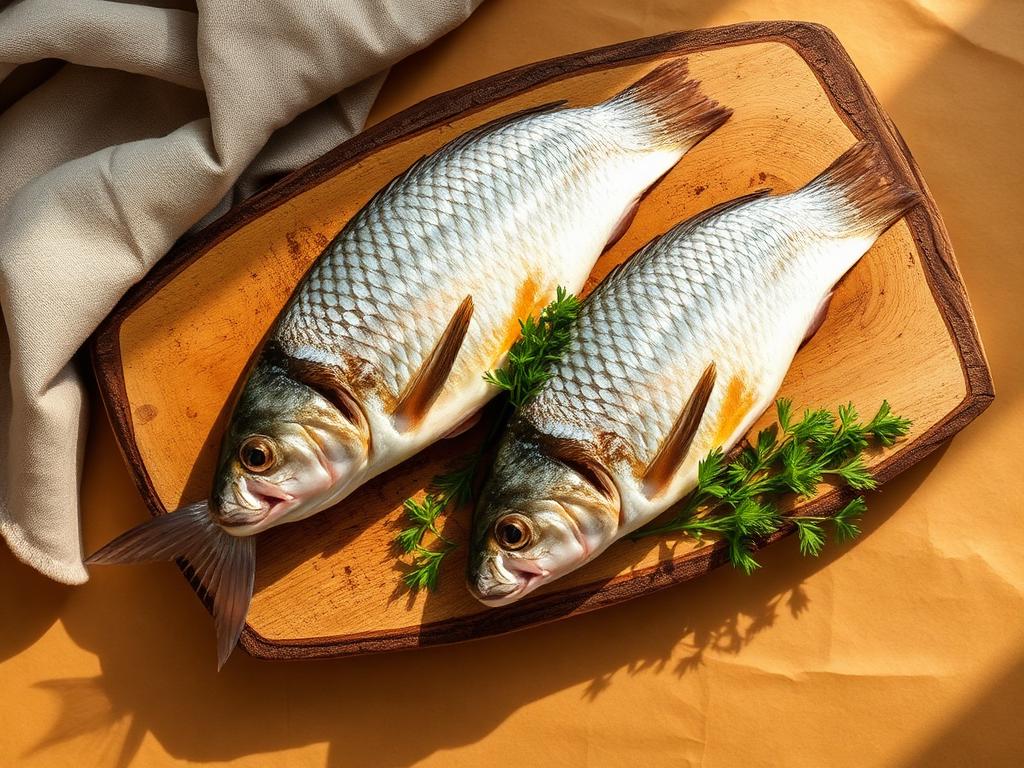
The Gospels do not give Jesus a diet plan, but between the four of them they mention a fairly specific handful of foods — some he plainly ate, one he was offered before the crucifixion and refused, and one he went looking for and never got. Reading each reference carefully, rather than assuming, turns up a short, honest list rather than a speculative one.
Bread
Bread sits at the center of the meal now known as the Last Supper: ‘And as they were eating, Jesus took bread, and blessed it, and brake it, and gave it to the disciples, and said, Take, eat; this is my body’ (Matthew 26:26). It is a word Jesus reaches for elsewhere to describe himself, but this is the one scene where the Gospels actually show him physically breaking a loaf and handing it to the people sitting at his own table.
Fish
Fish appears at both ends of the Gospel story, always tied to a shared meal. On the shore of Galilee after the resurrection, ‘they saw a fire of coals there, and fish laid thereon, and bread’ (John 21:9), and Jesus tells the stunned disciples, ‘Come and dine’ (John 21:12), serving it to them himself (John 21:13). Days earlier, to prove to that same group he was not a ghost, Luke records that ‘they gave him a piece of a broiled fish, and of an honeycomb’ (Luke 24:42) — and he ate it in front of them.
Wine
Jesus’ first recorded miracle produces wine rather than merely serving it: at a wedding that had run out, he turns jars of water into a drink so good the master of the feast assumes the host saved the best for last (John 2:9-10). At his final meal, wine returns with new meaning attached, as he tells his disciples he will not drink of ‘this fruit of the vine’ again ‘until that day when I drink it new with you in my Father’s kingdom’ (Matthew 26:29) — a line that only makes sense if he had been drinking it with them up to that point.
The passover meal, built around a lamb
Luke describes Jesus sending Peter and John ahead of the Last Supper with clear instructions: ‘Go and prepare us the passover, that we may eat’ (Luke 22:8), and once they returned, he told the gathered table, ‘With desire I have desired to eat this passover with you before I suffer’ (Luke 22:15). Luke’s account never actually uses the word lamb in this scene, but the passover meal it describes was defined by the law around exactly that: a household lamb, killed and roasted whole, eaten with unleavened bread and bitter herbs (Exodus 12:3-8). Whatever else sat on the table that night, it was built on that older instruction, kept the way it had been kept for well over a thousand years.
Honeycomb
The same verse that puts broiled fish in the risen Jesus’ hands also puts honeycomb there: ‘they gave him a piece of a broiled fish, and of an honeycomb’ (Luke 24:42). It is a small, specific detail included, it seems, for the reason Luke gives it — proof to frightened disciples that they were looking at a body that could actually eat, not an apparition.
A drink refused, and a drink received
Two different drinks appear near the cross, and the Gospels keep them carefully distinct. Before the crucifixion began, Jesus was offered a numbing mixture: Matthew calls it ‘vinegar to drink mingled with gall,’ and after tasting it, ‘he would not drink’ (Matthew 27:34); Mark describes what is likely the same offer as ‘wine mingled with myrrh: but he received it not’ (Mark 15:23). That drink he refused outright. Near the very end, a second and different drink was raised to him: ‘one of them ran, and took a spunge, and filled it with vinegar, and put it on a reed, and gave him to drink’ (Matthew 27:48). John’s Gospel confirms this one was not merely offered but taken: ‘When Jesus therefore had received the vinegar, he said, It is finished: and he bowed his head, and gave up the ghost’ (John 19:30). Plain vinegar, received at the very last, was the final thing any Gospel shows him drinking.
The one food he went looking for and never got
Not everything the Gospels mention was eaten. Walking toward Jerusalem hungry, Jesus approaches a fig tree ‘if haply he might find any thing thereon: and when he came to it, he found nothing but leaves; for the time of figs was not yet’ (Mark 11:13) — a fig tree mentioned, no fig eaten, which is precisely the point of the story that follows it.
A short, specific list
Put together, it comes to bread, fish, wine, a passover lamb, honeycomb, and a last sip of vinegar as food and drink the Gospels show Jesus actually consuming. A gall-and-myrrh mixture offered before the crucifixion was refused outright, and a fig tree is the one food he went looking for and never got. For the fuller picture of what these foods meant under the law Jesus himself grew up keeping, the free Starter Guide walks through the complete clean and unclean list.
Frequently asked questions
Did Jesus eat shellfish or pork, according to the Gospels?
Neither is ever mentioned. None of them falls on the unclean side — the fish and the lamb are explicitly clean under Leviticus 11, and bread, wine, and honey fall outside the animal laws entirely.
Did Jesus actually eat a fig in the Gospels?
No instance of it is recorded. Mark 11:13 shows him approaching a fig tree while hungry and finding no fruit on it at all — the opposite of an eating scene.
What was in the passover meal Jesus ate at the Last Supper?
Luke 22:8-15 records Jesus sending two disciples to prepare ‘the passover’ without listing its contents item by item, but the meal it refers to was defined by Exodus 12:3-8 around a roasted lamb, unleavened bread, and bitter herbs.
Is there evidence Jesus drank wine, not grape juice?
The Gospels do not distinguish the wine at Cana or the Last Supper from ordinary fermented wine, and Matthew 26:29 has Jesus referring to having shared ‘this fruit of the vine’ with his disciples up to that point.
The Biblical Diet Starter Guide — free
The printable clean & unclean list, a week of shopping lists, and seven biblical recipes.
Weekly recipes & shopping lists follow. Unsubscribe anytime.